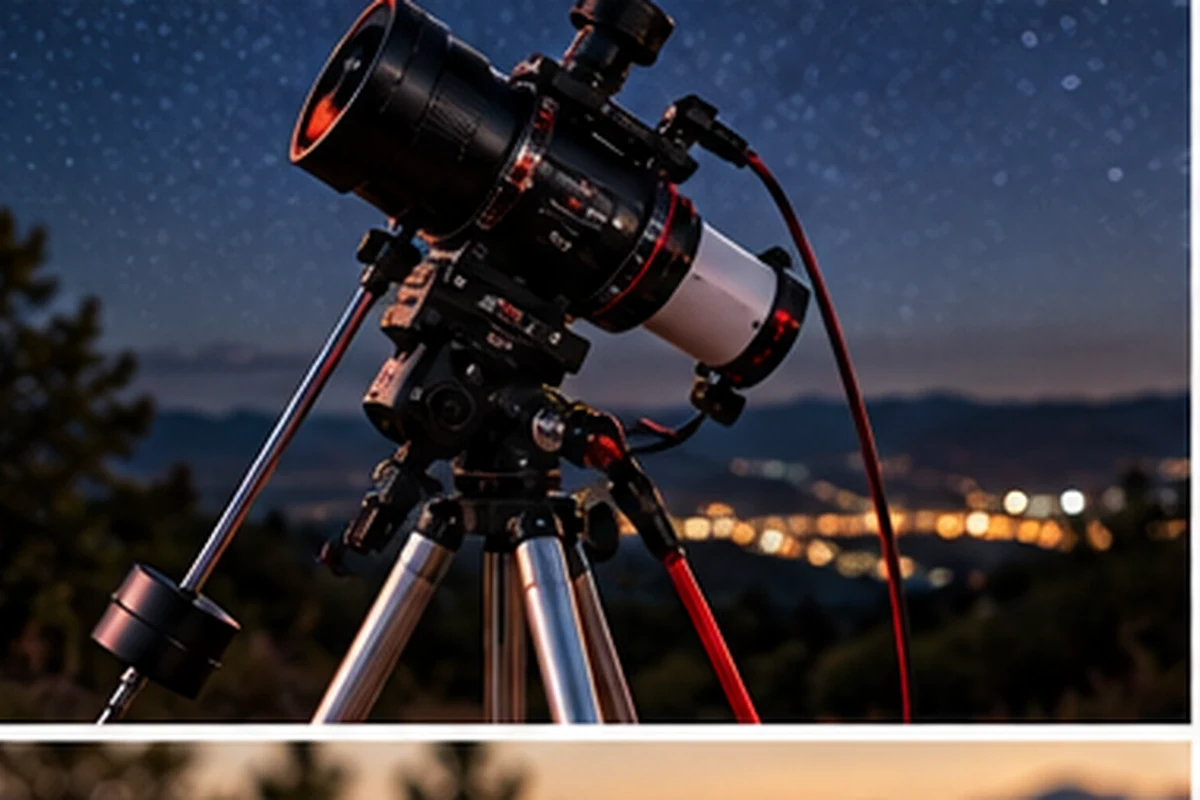
Vibration suppression pads can help when the shake comes up from the surface under the tripod, such as a deck, patio or floor. They do little when the tripod, mount head or tube is itself flexing, and no pad will fix a tripod that is too light for the telescope. Test one for yourself, compare the view before and after, and treat a steadier tripod or a pier as the real fix if shake persists.
What these pads are meant to do
A suppression pad is a damping layer that sits between a tripod foot and the ground. The idea is to absorb some of the vibration that travels through the surface, and to calm the motion that follows a tap or a gust. Makers describe them in terms of damping; this page quotes no performance figures because the effect depends on the pad, the surface and the mount.
That framing matters. A pad changes one link in the chain, the contact with the ground. A telescope view is steady only if every other link is steady too: the tripod legs, the leg locks, the head, the clamp, the tube and the focuser. Our guide to why a stable mount beats more magnification explains why the support deserves as much attention as the optics.
Where the shake really comes from
Before you buy anything, work out which kind of vibration you have. The fix is different for each.
| Symptom | Likely source | What to try first |
|---|---|---|
| The view jumps when someone walks nearby | Surface under the tripod: deck, floor or balcony | Move to firmer ground, or try a pad under each foot |
| The view keeps swinging after you touch the focuser | Mount head, tripod legs or tube clamp | Check every lock and clamp, lower the legs, add a stiffer support |
| The view sways in a breeze | Wind on the tube and tripod | Add a windbreak, shorten the legs, keep the tube low |
| The view shakes when you press the eyepiece | Handling and focuser | Use lighter touch, or consider a motor or other focus aids |
| Shake gets worse as you raise the tripod | Extended legs flex | Shorten the legs and sit to observe |
If you observe on a wooden deck or an apartment balcony, the surface may be your main problem, and our guide to a telescope for an apartment balcony covers that case. If you observe on grass or soil, the ground often damps vibration well by itself, and a pad may add little or nothing.
Reading a pad listing
Many pads are sold for other equipment, and the listing may not mention telescopes at all. Check the size against your tripod feet, so the foot sits fully on the pad and cannot slide off its edge. Look at the stated material and thickness, and read what the seller says it is for. If the description relies on vague claims, treat it as a test purchase and keep the return terms handy.
Surfaces differ
A concrete patio, a wooden deck, a tiled floor and a lawn each transmit vibration differently. A deck can act like a drum when someone walks across it, concrete usually transmits less of that motion, and a lawn tends to damp it. If you can choose where to set up, moving the telescope a few feet to a firmer spot is the cheapest fix and costs nothing to try.
A simple before-and-after test
Do not trust a claim on a package. Run a test with the telescope you own, at the magnification you actually use.
- Aim at a distant, fixed target in daylight, such as a distant sign, or a bright star at night. Use a high power that makes any motion obvious.
- Tap the tube gently or nudge the focuser the same way each time, then count how long the image takes to settle. Use a clock rather than your memory.
- Repeat with the pads under the feet, on the same surface, with the same touch.
- Walk near the setup at the same pace both times and compare the movement in the view.
- Keep the pads only if you see a clear difference. If you cannot tell, return them.
A thick, soft pad can introduce springiness of its own, so a taller tripod with a heavy load may feel less stable on a pad than without one. Read the tripod and mount manual for any guidance on feet and accessories, and watch for the telescope rocking.
Check the listing for the pad size and whether it suits your tripod feet. Test them before committing.
When a pad is not enough
If the shake persists with a pad, the problem is in the support. A tripod that is too light for the telescope, legs fully extended, loose clamps and a head that flexes will all outweigh a damping layer. Our telescope tripods page covers what to look for in stiffness, spreaders and leg extension.
Practical steps that cost little:
- Shorten the legs and sit to observe, so the load sits lower.
- Check every lock and clamp against the manual before each session.
- Use the tripod as the manual describes, including any spreader or weight hook, and add nothing the maker does not allow.
- Let it settle after you touch it, instead of judging the view at once.
- Reduce handling: some imagers use motorised focusing, and our electronic focuser guide covers that route, while a Bahtinov mask can help you reach focus in fewer tries.
Format matters too. Our refractor versus Dobsonian comparison touches on this, because a low Dobsonian base is a different stability story from a tall tripod.
When a pier or a better tripod is the real fix
If you observe or image from one spot, a permanent or portable pier takes the legs out of the equation by giving the mount a fixed, rigid base. See the portable piers page and the telescope piers page for the formats. For a mobile setup, a sturdier tripod rated by the maker for your mount and load is usually better value than a stack of accessories. Confirm any load rating from the maker's own page; this site does not quote figures.
Check the maker's stated load and the head or mount it is made for, and read the seller's return terms.
Check that the pier or adapter is made for your mount and confirm the connection with the maker.
Buying used
Used tripods are common and often good value. Check that the leg locks hold, the head turns smoothly, no part is bent and the feet are intact. Ask whether the original accessories are included and read the return terms. Our used Dobsonian inspection guide shows the habit of testing every axis, which applies to a tripod too.
Pads can help when the surface is the problem, such as a deck or floor, and do little when the tripod, head or tube flexes. Run a before-and-after tap test on your own setup, shorten the legs, check every clamp and move to a sturdier tripod or pier if the shake persists.
Sources and verification
No damping figures, load ratings or model claims are made. Check the tripod and mount manuals for load limits and accessory guidance, and read the pad listing for its stated use.
Frequently asked questions
Do vibration suppression pads work for telescopes?
They can help when the shake comes from the surface under the tripod, such as a deck. They do little when the tripod, head or tube flexes. Test a pad on your own setup before keeping it.
Where should I put vibration pads?
Under each tripod foot, between the foot and the ground, unless the tripod or pad maker advises otherwise. Check the manual for any guidance on feet and accessories.
Will a pad help on grass?
Often little, because soil and grass tend to damp vibration by themselves. A pad is more likely to matter on a deck, patio or floor.
How do I tell whether a pad made a difference?
Tap the tube the same way with and without the pad, time how long the image takes to settle, and compare walking nearby. Keep the pad only if the difference is clear.
When should I buy a better tripod or a pier instead?
If the tripod is too light for the telescope, the legs flex when extended or the head wobbles, a pad will not fix it. A sturdier support or a pier addresses the cause.