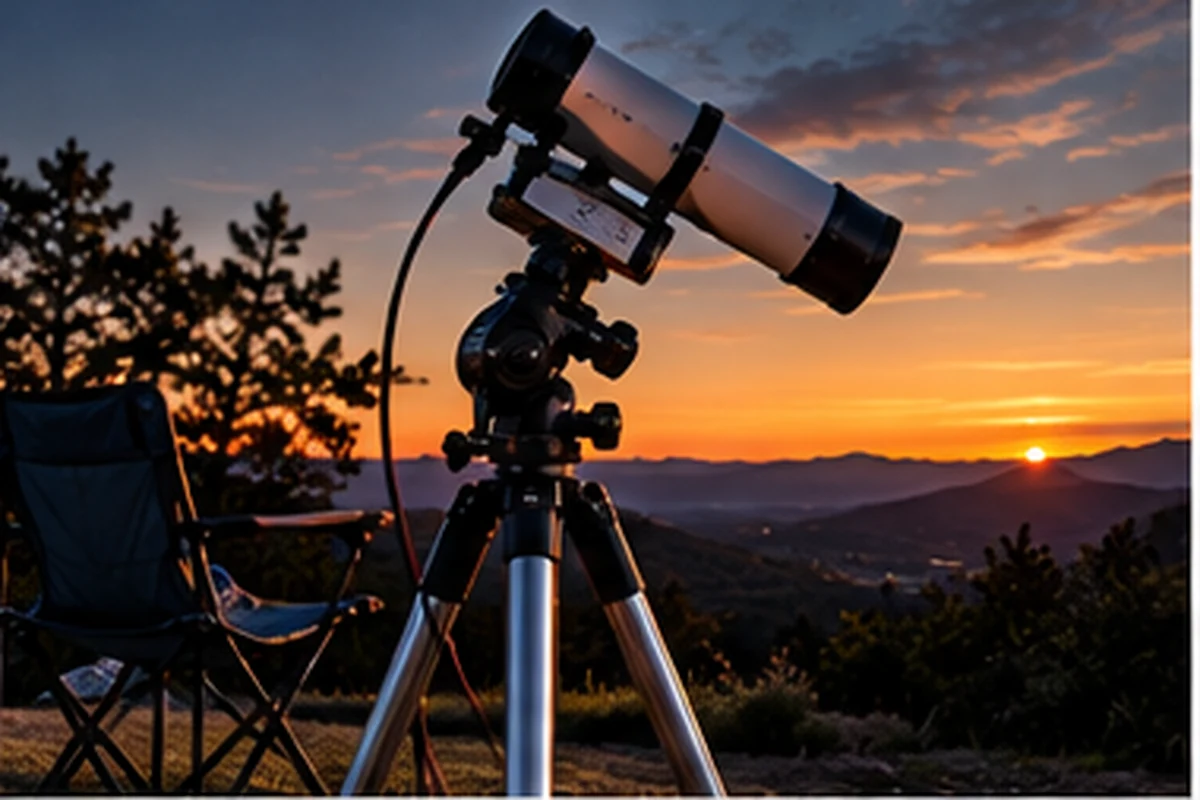
Choose a small refractor if you want a telescope you can carry out in one trip, store in a closet and use with almost no upkeep. Choose a Dobsonian if you have room to store a bulkier tube and want the most light-gathering for the least complexity at the eyepiece. Your yard, your storage space and how often you will really set up decide it more than any single specification.
The two formats in plain terms
A refractor is a lens at the front of a sealed tube, usually on a tripod with a mount head. A Dobsonian is a reflector: an open or truss tube with a mirror at the bottom, sitting on a simple swivelling base that moves up-down and left-right. Both are manual unless you add a motorised or tracking mount, so neither follows the sky for you out of the box.
The real contrast is how they get used. A refractor is a compact instrument that depends on its tripod. A Dobsonian is a bigger instrument that depends on its base and on your ability to move it. Our overview of refractor telescopes and Dobsonian telescopes covers each class on its own, and the first telescope guide covers the wider decision. This page puts them head to head.
Setup time and carrying
Setup time decides whether a first telescope gets used. A small refractor usually means opening a tripod, seating the tube and attaching a finder and eyepiece. A Dobsonian usually means lifting the base and the tube out separately, setting them down and checking that the base sits level on the ground.
Weight and awkwardness matter more than a number on a spec sheet. A tube you can carry with one hand while holding a door is different from a tube and base you have to take through the house in two trips. Check the maker's stated weight and dimensions for the exact model, and ask yourself honestly how many steps and how much lifting you will tolerate on a cold weeknight. A telescope that stays in the closet shows you nothing.
If you carry gear to a dark site as well as the yard, read our guide to the real cost of a travel telescope before deciding that the bigger option is portable enough.
Storage, space and upkeep
Refractors have sealed tubes, so there is little to maintain beyond keeping the lens clean and covered. Reflectors use mirrors that sit in a cell, and many need their alignment checked now and then. That job, called collimation, is simple on most Dobsonians once learned, but it is a task a refractor owner usually avoids. Our collimation guide explains what it involves.
Open-tube Dobsonians also expose the mirror to dust and to room air, so a cover and a clean storage spot matter. Where you keep the telescope changes the answer: a cold garage, a shed and a heated closet all treat optics differently. See what to protect when storing a telescope in a cold garage or shed before you pick a place.
| Question | Small refractor on a tripod | Dobsonian |
|---|---|---|
| Carrying | Often one tube plus a tripod | Usually a tube and a base; check weight and size for the model |
| Setup steps | Tripod, mount head, tube, finder, eyepiece | Base on the ground, tube into the base, finder, eyepiece |
| Alignment upkeep | Sealed tube, usually little | Mirrors may need collimation checks |
| Mount stability | Depends heavily on the tripod and head | The base is part of the design and sits low |
| Light gathering for the size | Smaller aperture for the length | Usually more aperture for the money |
| Used market | Common, check lens and focuser | Common, check mirror, base and focuser |
Mount stability and how the view feels
A shaky mount ruins good optics. Many small refractors ride on lightweight tripods, and the view can bounce every time you touch the focuser. A Dobsonian base is a simple low design that moves smoothly if it is well made, though cheap bases can stick or jerk. In both cases the mount matters as much as the tube. Read why a stable mount beats more magnification and give the support the same scrutiny you give the optics.
Where your eye ends up also differs. On a refractor with a diagonal you often look downward at the back of the tube, which can mean raising the tripod or sitting. On a Dobsonian the focuser sits near the top of the tube on the side, so you may need a stool or a chair that adjusts. A seat you can set at the right height is worth having for either; our observing chair guide explains what to look for.
What your yard changes
- Uneven or soft ground: tripod legs can sink or tilt; a Dobsonian base needs a reasonably firm, level spot. Test both on your actual lawn or patio.
- Trees and rooflines: your sky may be a narrow window. A telescope you can move a few feet quickly beats one you leave in a single place.
- Stairs and gates: if the gear has to go up or down steps, count the trips.
- Light from neighbours: bright targets such as the Moon and planets suit either type; faint objects reward aperture but need a darker site.
- Wind: a tall mount on a light tripod shakes more than a low base. A fixed windbreak helps with both.
Cost of ownership and how to decide
The tube is only part of the bill. Add a finder, at least one more eyepiece, a cover or case, a seat, and a red light for reading charts. Some of this is cheap, some is not, so list it before you commit. Our first telescope checklist and the site's used-gear pages explain how to compare the whole system, not just the tube.
Both types turn up secondhand. Check the lens or mirror for damage, test the focuser through its full travel and move every axis before you buy. Our guide to inspecting a used Dobsonian walks through the checks, and the same habits apply to a used refractor. Compare what similar items actually sold for, not only asking prices.
Check the tube length, the tripod and mount that come with it, and the included finder and eyepieces before you buy.
Check the stated weight and dimensions, the base, and whether the focuser and finder are included. Plan for storage space.
A quick way to decide
- Measure your storage and the path from there to where you will observe.
- Decide how many trips you will make with gear and whether you will set up on a whim.
- Pick the mount first. A steady, easy-to-use support beats extra aperture you will not use.
- Price the whole kit, including finder, eyepieces, cover and seat.
- Buy from a seller whose return terms you have read, and test the telescope on the first clear night.
Pick a small refractor for quick setup, easy storage and little upkeep. Pick a Dobsonian if you have room to store and move a bigger tube and want more aperture on a simple base. Choose the mount and your storage space first, price the whole kit, and test on the first clear night.
Sources and verification
No weights, apertures, tube lengths or prices are quoted for any model. Confirm specifications on the maker's page or the listing, check the manual for collimation and cleaning, and read the seller's return terms before you buy.
Frequently asked questions
Is a refractor or a Dobsonian better for a beginner?
Neither is better for everyone. A small refractor suits people who want grab-and-go simplicity and low upkeep. A Dobsonian suits people with storage room who want more aperture and a simple base.
Does a Dobsonian need collimation and a refractor does not?
Many reflectors, including Dobsonians, need their mirrors aligned from time to time. Refractors have sealed optics and usually need little. Check the manual for your model.
Can I use either telescope in a small yard?
Yes. Check where the telescope will be set up, how level and firm the ground is, and how much of the sky you can see between trees and buildings.
Do these telescopes track the sky automatically?
Not by default. Both are manual unless you add a motorised or tracking mount, so you nudge them by hand to keep an object in view.
Should I buy a first telescope used?
It can work well if you know what to check. Test the optics, the focuser and every axis, read the seller's return terms and compare sold listings, not just asking prices.