Read the seller's return terms before you pay, then test the telescope within days of buying it, not on gift day. A scope bought in November can pass its return window before anyone unwraps it, and a problem found on a cloudy January night may be too late to fix with a return. This guide covers both halves: what to read in the return policy, and a short test you can run in daylight.
Find the return terms before you check out
The Federal Trade Commission's online shopping advice is plain about this. Before you send anything back, you need to know who pays return shipping, how many days you have and whether there is a restocking fee, and sale or clearance items can carry different terms from regular stock. Those three questions belong on your pre-purchase list, because the answers decide what a mistake costs.
On eBay, return terms are set by the individual seller and shown in the listing details. eBay's own returns page notes that many sellers accept returns if you change your mind, and that who pays return shipping depends on the seller's policy and the reason for the return. It also points out that the Money Back Guarantee can apply when an item does not arrive, is faulty or damaged, or does not match the listing, even when the seller's policy says no returns. That is useful protection, but it is not the same as a generous policy, so read the line on every listing.
For other retailers, open the seller's own return policy page and read it rather than relying on memory or on another store's rules. Some sellers publish a separate holiday window for gifts. If one applies, it will be on the listing or the policy page, and the closing date is the number that matters.
| Question | Where to look | Why it matters for a telescope |
|---|---|---|
| How many days do I have, and from what date? | Listing details and the seller policy page | The clock may start at purchase or delivery; a gift opened weeks later can miss it |
| Who pays return shipping? | Seller policy and the reason for return | A long tube or a heavy base can be costly to ship back |
| Is there a restocking fee? | Seller policy | It reduces your refund even when the telescope is fine |
| Does the seller accept returns for a change of mind? | Listing returns line | A fault is covered differently from "it was not what I hoped" |
| What condition must it be in? | Seller policy, and eBay returns guidance | eBay notes that used, damaged or missing-parts returns can mean deductions |
Keep records and keep the box
The FTC suggests saving the company name and site, what you ordered and when, the seller's return policy, the shipping promise, every message with the seller and your payment records. Take a screenshot of the return terms on purchase day, since listings and policies can change.
Keep all the packaging too. A telescope in its original box with its inserts is far easier to return safely than one wrapped in whatever is to hand. If the box is gone, a padded telescope case or a sturdy replacement box is worth having before you ship anything back. Our guide to shipping telescopes safely covers the packing side.
Measure the tube and mount parts, then check the inside dimensions in the listing. A good fit protects a return and the telescope's next trip.
The first-day test: do it in daylight
Most faults show up without a single star in the sky. Do this within the first day or two, and write down anything odd as you go.
- Unpack and count. Compare every part to the box contents list in the manual and the listing. Missing parts are the easiest problem to report.
- Look for damage. Check the tube, the optics through any open end, the focuser and the mount for dents, cracks or loose pieces. Take photos before you touch anything else.
- Assemble it once, following the manual. Note any thread that will not engage, a clamp that will not hold or a leg that will not lock.
- Test stability. Tap the tube gently and watch how quickly it settles. Sky & Telescope's first-time buyer advice lists a tube that stops shaking quickly and smooth motion on both mount axes as things to look for.
- Move every axis and the focuser through their full range. Jerky, grinding or slipping motion is a fault worth reporting early.
- Aim at something far away on the ground, such as a distant treetop or a roof, with the lowest-power eyepiece. Focus it and line up the finder.
The first-night test, kept short
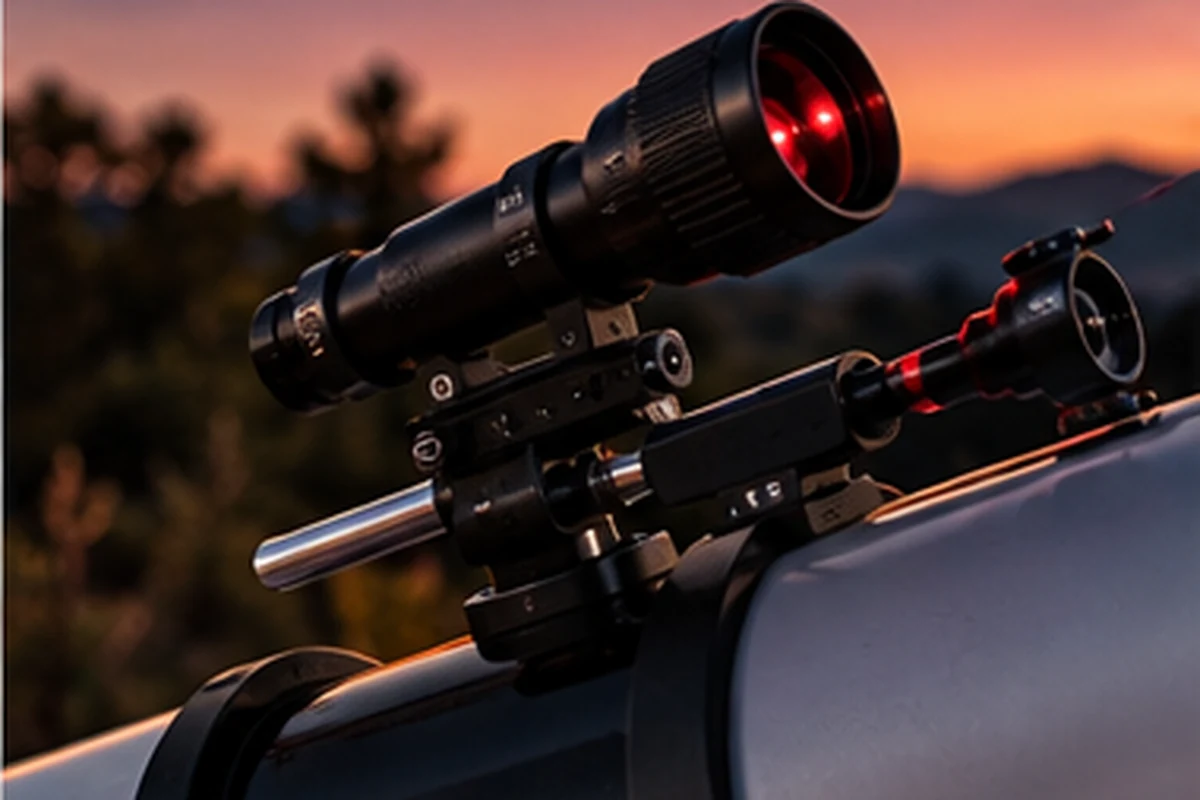
When the sky is clear, start with the Moon if it is up. It is bright and easy to find, so it shows quickly whether the optics focus to a clean edge and whether the mount can hold a target. Then try a bright star at low power. You are looking for a focus that reaches a sharp point, a finder that agrees with the eyepiece and a mount that stays put when you let go. The red headlamp guide helps you do all of that without losing your night vision.
If the telescope has a motor, a hand controller or a power supply, test those at the same time and follow the manual for power and batteries. Do not rely on a first look in the field to find a problem that a lamp-lit garage test would have caught.
If something is wrong, act inside the window
- Stop using the telescope and keep everything, including packaging.
- Photograph the problem and list what you checked.
- Message the seller with the order details and the evidence, and ask what they will do.
- On an eBay purchase, if the seller does not respond within three business days or cannot resolve the issue, eBay's page says you can ask eBay to step in.
- Choose the remedy you want, return or replacement, and follow the seller's instructions for shipping. eBay advises a tracked service if you buy your own label.
Clouds can delay a first-night test for weeks, which is the reason for the daylight steps above. Put the return deadline on your calendar and finish the daylight checks before it. Our telescope gift guide has the pre-gift routine in short form, and the toy-scope listing guide helps you avoid a return in the first place.
Open each seller's policy, note the return window and who pays shipping, and compare like with like.
Read who pays return shipping, the number of days and any restocking fee before you buy. Save the terms and the packaging, test the telescope in daylight within a day or two and put the return deadline on your calendar so a fault can still go back.
Sources and verification
- Federal Trade Commission, online shopping: what to check before returning an item (who pays, how many days, restocking fees), sale-item terms, which records to keep and the shipping promise.
- eBay Help, returns and refunds: return terms are set by sellers and shown in the listing, the Money Back Guarantee, deductions for used or damaged returns, tracked shipping.
- Sky & Telescope, tips for first-time telescope buyers: what to check in a telescope in hand and the advice to buy from a seller with a good return policy.
No return-window lengths are quoted for any retailer, because they differ by seller and can change. Read the policy on the exact listing, and read Amazon's own return page if you buy there.
Frequently asked questions
How long is the return window for a telescope bought for the holidays?
It depends on the seller and the platform. Check the listing details and the seller's policy page, note the closing date and look for any separate holiday window the seller publishes.
Who pays return shipping if the telescope is faulty?
That depends on the seller's policy and the reason for the return. Read the policy before you buy, and on eBay remember that the Money Back Guarantee can apply to items that are faulty, damaged or not as described.
Should I unwrap a gift telescope before giving it?
Testing it first is the safest approach if the return window will close before the gift is opened. Handle it gently, keep all packaging and parts together and check the seller's condition rules for returns.
What should I test if the weather is cloudy?
Run the daylight checks: count the parts, inspect for damage, assemble it, test the mount and focuser movement and focus on a distant object on the ground. Keep it away from the Sun.
What records should I keep?
Save the order confirmation, a screenshot of the return terms, the shipping promise, your messages with the seller and your payment record, as the FTC advises, plus photos of any damage.