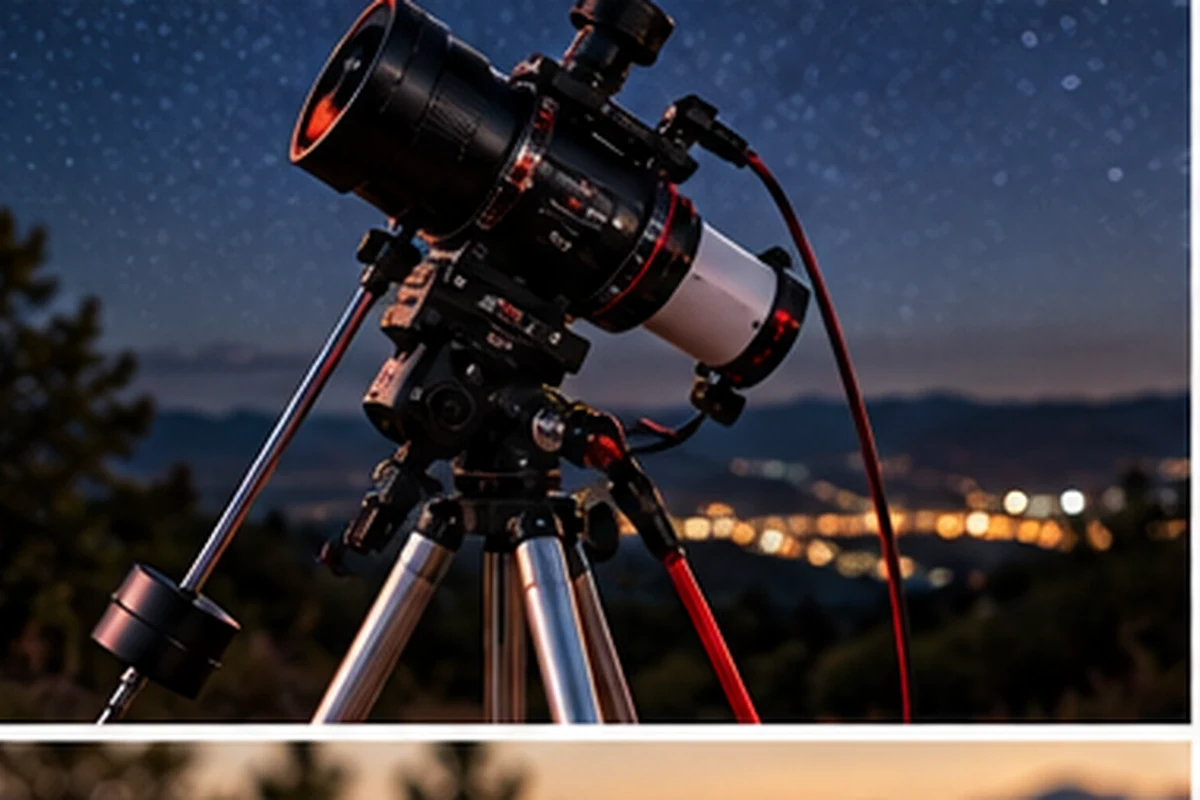
A toy scope gives itself away in the listing: the headline number is magnification, the aperture is hard to find, and the mount is described with adjectives instead of details. Sale season is when those listings multiply, so read the aperture, the mount and the contents list before the discount banner. In 2026, Thanksgiving is Thursday, November 26, Black Friday is November 27 and Cyber Monday is November 30.
Why the sale calendar makes this harder
The federal holiday schedule lists Thanksgiving Day 2026 as Thursday, November 26. Black Friday is defined as the day after Thanksgiving and Cyber Monday as the Monday after that, which gives November 27 and November 30. Retailers choose their own sale windows, so treat those dates as an anchor, not a deadline, and do not assume any particular scope will be discounted.
This guide does not list deals or prices. What it can do is help you sort a crowded results page into telescopes worth a closer look and boxes of plastic that happen to include a tube. The same checks work on new listings, open-box listings and used ones.
Read the aperture before anything else
Aperture is the diameter of the main lens or mirror, and it is the specification that decides how much light the telescope gathers and how much detail it can show. Sky & Telescope's advice for first-time buyers puts aperture first for exactly that reason, and it puts optical quality and a sturdy, smooth mount ahead of almost everything else.
Magnification is the weak number. Dividing the telescope's focal length by the eyepiece's focal length gives it, so a short eyepiece or a bundled Barlow can push the figure as high as the seller likes. The same Sky & Telescope article says the maximum useful magnification is roughly twice the aperture in millimetres, or about 50 times the aperture in inches, and that beyond that the image gets faint and fuzzy. A Manitoba Museum guide to choosing a first telescope goes further and advises steering clear of scopes marketed mainly on magnification.
So when a listing leads with a huge power figure and buries or omits the aperture, treat that as the first red flag. Compare the claimed power with the aperture yourself. If the claim is far beyond what the aperture can support, the number is advertising, not performance.
Six red flags a listing can show
| What the listing does | Why it matters | What to ask or check |
|---|---|---|
| Leads with magnification, not aperture | Power is easy to inflate; aperture is the real limit | Find the aperture in millimetres or inches; if it is missing, look at the maker's own page |
| Calls the tripod or mount "sturdy" and shows nothing | A tube that keeps shaking is a common reason a first scope stops getting used | Look for photos of the mount itself and for notes on smooth motion; read what buyers say about wobble |
| Pads the box with accessories | Extra eyepieces, filters and phone adapters do not make up for a weak mount or poor optics | Count the useful parts; ask whether you would buy each one separately |
| Bundles a Barlow to raise the headline power | It multiplies the number on the box, not the usable detail | Judge the telescope by its aperture and a sensible low-power eyepiece |
| Includes a small solar filter that screws into an eyepiece | The American Astronomical Society tells observers to discard these; sunlight concentrated by the optics can destroy them | Skip the listing, or ignore that accessory and never use it |
| Shows deep-sky photographs as the sales picture | Long-exposure images are not what the eyepiece shows | Look for seller photos of the actual product and its parts |
None of these flags proves a scope is bad on its own. Two or three together, especially a magnification headline plus a missing aperture, is a strong signal to move on.
What a better listing looks like
A trustworthy listing states the aperture and focal length, names the mount type, shows the real product from several angles and lists exactly what is in the box. It does not need to be fancy. Sky & Telescope's checklist for a telescope in the hand is a good template for the questions you want a listing to answer: does the tube stop shaking quickly after you touch it, do both axes of the mount move smoothly, is the finder easy to align, does the focuser turn without jerking.
You cannot test those things through a screen, which is why the seller matters. The same article advises buying from a seller with a good return policy, and it recommends looking through members' telescopes at a local astronomy club if you can. Our telescope gift guide matches scope types to the person, and the beginner eyepiece guide explains what a sensible eyepiece looks like once you have a telescope worth fitting it to.
A used telescope from an owner who upgraded is often a better optic than a new toy. Check photos of the mirror or lens, the focuser, the finder and the base, and confirm what is included.
Used gear is one way around the toy aisle
Marketplaces are full of telescopes that were bought with good intentions and sold on. The tradeoff is condition and completeness: Sky & Telescope cautions buyers to avoid used equipment unless they know exactly what they are buying, so use a checklist. Our used telescope inspection guide covers optics, mechanics and missing parts, and the used Dobsonian checklist is a quick version for the most common bargain.
When you search, describe the telescope type rather than a brand and read every photo. Ask the seller for anything the photos do not show, and note whether returns are accepted before you bid or buy.
A five-minute listing check for sale week
- Find the aperture. If it is not in the listing, find it on the maker's page or skip.
- Name the mount. Alt-azimuth, equatorial, tabletop or Dobsonian base, and what it sits on.
- Ignore the magnification headline and the accessory count.
- Read what is in the box, then read what is not.
- Check seller and returns on the listing page, and write the last return date on your calendar.
Our guide to buying astronomy gear online covers the same discipline for any accessory, and the red-dot finder guide is worth a read if the scope you like comes with a poor finder.
Look for a stated aperture, a named mount and photos of the mount. Check seller terms before you commit.
Read the aperture first, then the mount, then the box contents. Treat a magnification headline, a missing aperture or a bundled eyepiece sun filter as reasons to move on, check the seller and return terms on the exact listing, and consider a used scope from a seller who shows clear photos.
Sources and verification
- U.S. Office of Personnel Management, federal holidays: lists Thanksgiving Day 2026 as Thursday, November 26.
- timeanddate.com, Black Friday: defines Black Friday as the day after Thanksgiving and Cyber Monday as the Monday after; November 27 and 30 are derived from that rule.
- Sky & Telescope, tips for first-time telescope buyers: aperture as the main factor, the useful-magnification limit, the mount and in-hand checks, return policy and caution about used gear.
- Manitoba Museum, choosing a first telescope: advice to avoid scopes marketed on magnification claims.
- American Astronomical Society, solar viewers and filters: eyepiece-end solar filters should be discarded; filters belong over the front opening.
No prices, discounts or specific models are quoted. Confirm aperture, mount type, box contents, seller and return terms on the exact listing.
Frequently asked questions
When are Black Friday and Cyber Monday in 2026?
Thanksgiving is Thursday, November 26, 2026. Black Friday is the next day, Friday, November 27, and Cyber Monday is Monday, November 30. Retailers set their own sale windows, so some sales start earlier or run longer.
What is a toy telescope?
It is a telescope sold mainly on a big magnification number, with small optics, a flimsy mount and a pile of accessories. The listing often hides or omits the aperture, which is the specification that matters most.
Is high magnification a sign of a bad telescope?
A high figure on its own is a warning sign. Useful magnification is limited by the aperture and the steadiness of the air, so a claim far beyond what the aperture supports is advertising rather than performance.
Is a used telescope safer than a cheap new one?
It can give you better optics for the money, but only if you inspect it. Check the mirror or lens, the focuser, the finder and the mount, confirm what is included, and read the seller's return terms first.
Can I use an eyepiece sun filter that came with a telescope?
No. The American Astronomical Society says filters that thread into the eyepiece end are dangerous and should be discarded. Never look at the Sun through any optic without a certified solar filter from the maker over the front opening.