Most gift telescopes fail for boring reasons: they wobble, they are too heavy to bother carrying out, or they promise views they cannot deliver. None of that shows up on a product page. This guide skips the "best telescope" lists and starts with the person you are buying for. Find them below, then use the search buttons to compare what is in stock right now.
Who are you buying for?
Tabletop Dobsonian or a small refractor on a simple mount
For kids, the first wow is almost always the Moon's craters and Saturn's rings. Both are bright, easy targets, so you do not need a big telescope. You need one that is easy to aim and does not shake every time a small hand touches it. A tabletop Dobsonian sits on a sturdy table or stool and swings up, down and around like a cannon. A small refractor on a simple up-down, left-right (alt-azimuth) mount works the same way and needs almost no setup.
Look for a simple alt-azimuth mount and a sturdy base.
More detail: tabletop telescopes · beginner telescope kits
A 6-inch or 8-inch Dobsonian
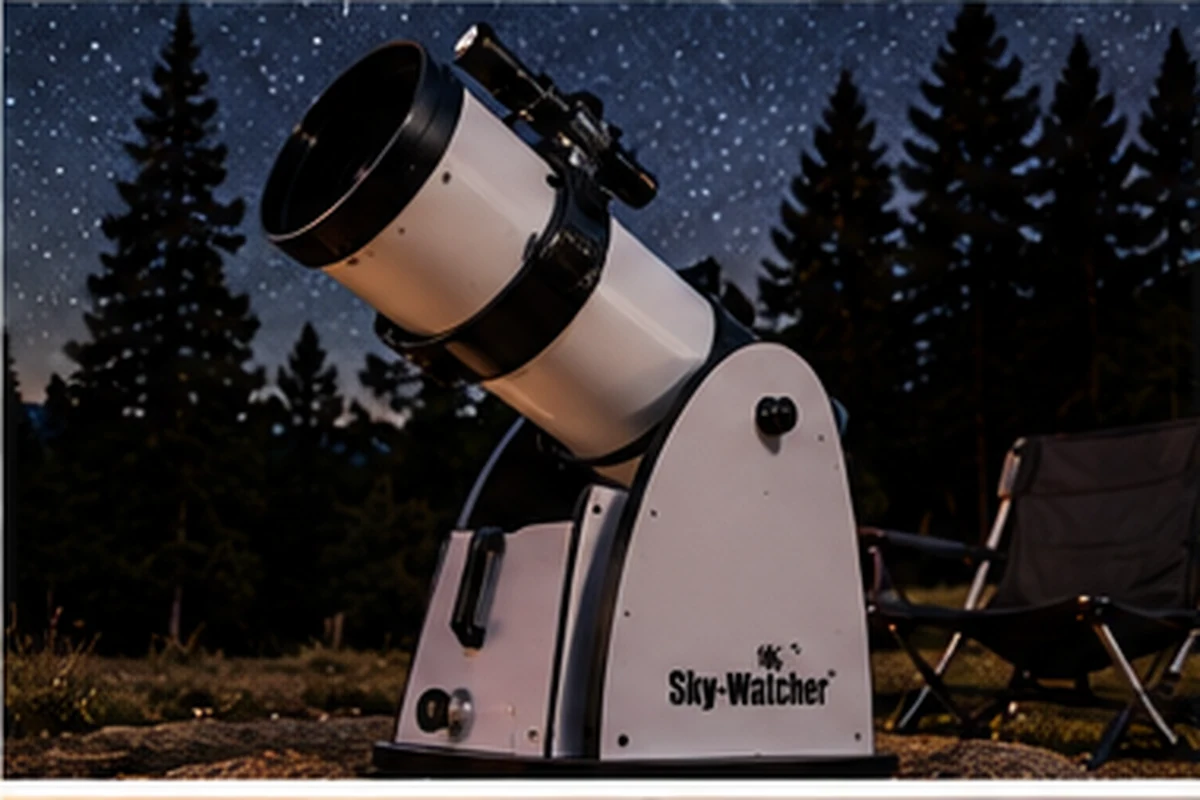
If there is one classic answer in amateur astronomy, it is the Dobsonian: a reflector telescope on a simple rocker-box base. It puts the most light-gathering aperture in front of the eye for the money, and aperture is what shows fainter galaxies, clusters and detail on planets. There are no motors to fail and no mount to align. You put it on the ground, point it and look.
Check the assembled size and weight against where it will be stored.
More detail: Dobsonian telescopes · why a stable mount beats more magnification
A compact Maksutov or short refractor on a sturdy mount
When storage space is tight or the telescope has to fit in a car trunk or carry-on, compact designs win. A Maksutov-Cassegrain folds a long focal length into a short tube, which makes it good for the Moon, planets and double stars. A short refractor gives wider views of star fields and doubles as a daytime spotting scope. Either one can live in a closet and be outside in two minutes.
Prioritize a stable mount over extra magnification.
More detail: Maksutov-Cassegrains · travel telescopes · the real cost of a travel telescope
A smart telescope
Smart telescopes combine a small telescope, a camera and software. They find targets on their own and build up color images of nebulae and galaxies on a phone or tablet by stacking many short exposures. That approach copes with light pollution far better than looking through an eyepiece, which makes them a strong fit for someone in a city who wants to see results the first night.
Confirm app support and any subscription terms before ordering.
More detail: smart telescopes · smart telescope vs classic telescope
Astronomy binoculars and a planisphere
A good pair of binoculars is the lowest-risk way to find out if someone loves the night sky, and they are still useful for birds, sports and travel if not. 7x50 and 10x50 are the classic astronomy sizes: bright, wide views of the Moon, star clusters and the Milky Way. Pair them with a planisphere, a rotating star wheel that shows what is up on any date and hour, and the gift is complete.
More detail: binoculars for astronomy · why binoculars first · choosing a binocular tripod
A used Dobsonian or refractor
Telescopes are simple, durable instruments, and the used market is full of good ones from people who upgraded. A used Dobsonian is one of the classic bargains in the hobby. The catch is completeness: check the mirror or lens, the focuser, the finder and any missing pieces, and confirm you can pick it up or that the seller packs it properly for shipping.
Check photos of the optics, focuser and included parts before buying.
Before buying: used Dobsonian inspection checklist · used telescope inspection guide
Three box claims to ignore
- Huge magnification numbers. Usable magnification is limited by aperture and the steadiness of the air. A common rule of thumb is about 50x per inch of aperture on a very steady night, and most of the best views happen at far lower power. A small telescope advertised at hundreds of times magnification is advertising blur.
- "Includes everything." A bag of extra eyepieces and filters does not fix a shaky mount. One stable telescope with one or two decent eyepieces beats a big bundle.
- Glossy galaxy photos on the box. Those are long-exposure photographs, often from large observatories. Through an eyepiece, most galaxies look like faint gray smudges, and that is normal. Set expectations so the first night is a win, not a letdown.
Before you wrap it
- Assemble it once yourself. Finding a missing screw on gift day is no fun.
- Align the finder in daylight. Point the telescope at a distant treetop or pole with the lowest-power eyepiece, then adjust the finder until it points at the same spot. This step alone prevents most first-night frustration.
- Check collimation on a reflector. Dobsonians and other reflectors sometimes arrive with the mirrors slightly out of line. See collimation tools.
- Plan the first target. If the Moon is up, start there. It is bright, easy to find and impressive at any size.
- Keep the box and receipt until you know it works, and check the seller's holiday return window.
Already own a telescope?
If the person you are shopping for already has a telescope, accessories make better gifts than a second scope. See gifts for someone who already owns a telescope, from red flashlights and observing chairs to Moon filters and eyepieces.
Related AstronomyEquipment guides
Frequently asked questions
What is the best type of telescope to give a beginner?
For most teen and adult beginners, a 6-inch or 8-inch Dobsonian is the classic choice: lots of aperture, a simple base and nothing to align. For kids, a tabletop Dobsonian or a small refractor on a simple mount is easier to handle.
Does a higher magnification number mean a better telescope?
No. Usable magnification is limited by aperture and steady air. A common rule of thumb is about 50x per inch of aperture on a very steady night, and most good views happen at much lower power. Large magnification claims on small telescopes are a warning sign.
Is a smart telescope a good gift?
It can be, especially for someone in a light-polluted city who enjoys technology. Smart telescopes build images on a phone or tablet rather than offering a traditional eyepiece view, so check app support and any subscription terms first.
Should I buy binoculars instead of a telescope?
If you are not sure the person will stick with astronomy, 7x50 or 10x50 binoculars are a low-risk start. They show the Moon, star clusters and the Milky Way well and stay useful for other hobbies.
Is it safe to look at the Sun with a gift telescope?
Only with a certified solar filter that covers the full front opening of the telescope. Never use a small solar filter that screws into an eyepiece. See our solar safety page before any daytime use.
What should I do before giving a telescope as a gift?
Assemble it once, align the finder on a distant object in daylight, check collimation if it is a reflector, plan an easy first target such as the Moon, and keep the box and receipt until you know everything works.