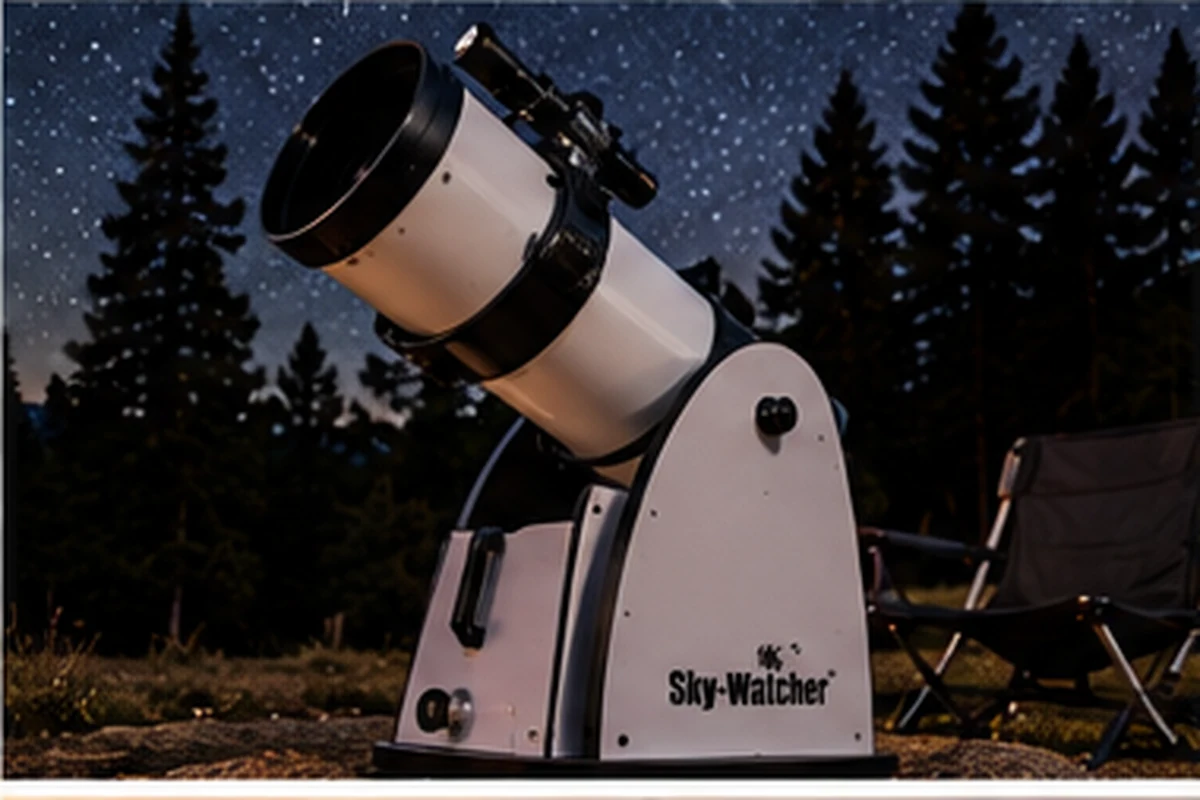
The easiest way to move a heavy Dobsonian is to split it into its tube and its base, then give each part a way to be carried or rolled: handles you can grip, a wheeled base or a dolly, and a plan for steps and doors. Match the cart or dolly to the telescope's weight in the manual, make sure wheels lock when you observe, and never carry the tube by the focuser or finder.
Why a Dobsonian gets hard to move
A Dobsonian's strength is aperture on a simple base, and that same design makes it bulky. The tube is long, the base is wide, and neither has natural handholds. The telescope that is a pleasure at the eyepiece can become the reason you stay indoors, because every session starts with a haul. A good transport plan is therefore part of the telescope, not an afterthought.
Our used Dobsonian inspection guide covers what to check before you buy, and the Dobsonian telescopes page covers the class. This page picks up where those leave off: getting the telescope from storage to the yard and back without hurting yourself or the optics.
Start with the manual and a weight check
Before you buy any cart, find the maker's stated weight for the tube and the base, and check the manual for how the maker intends the parts to be lifted and carried. Weights vary widely by model and design, and this site quotes none. Add the weight of anything you plan to carry with it, such as eyepieces, then compare the total with the stated capacity of any cart, dolly or wheel kit.
Plan lifts as well. If a part is too heavy for one person, use two people or a rolling support. Lift with your legs, keep the load close to your body and avoid twisting while you carry. If you have a back, knee or shoulder problem, do not rely on lifting at all; rolling and ramps are the safer plan.
| Option | What it does | What to check |
|---|---|---|
| Built-in or added carry handles | Give you a grip on the base or tube | Handle strength and where the maker says to lift |
| Wheelbarrow-style handles and wheels on the base | Let you tilt and roll the base like a barrow | That the maker offers them for your model |
| Dolly or platform with casters | Carries the base on a rolling frame | Caster locks, load capacity and size against the base |
| Hand truck or garden cart | Moves the tube or base over longer distances | Wheel size for grass, and stable loading |
| Ramps | Replace lifting over a step or threshold | Width, grip and the maker's capacity |
Handles and carrying the pieces
Many Dobsonians separate into two parts: the tube assembly and the rocker base. Check whether yours does and how the maker intends you to carry each one. Some designs have handles on the base, and a few designs use trusses that disassemble. Look for a grip that you can hold with both hands and one that does not sit on a part that was never meant to take weight.
Never pick up the tube by the focuser, the finder, the eyepiece or the secondary assembly. They are not load-bearing. Use the tube body, a cradle, rings or the grip the manual shows. Cover the open end before you carry it, because dust, a swinging door or a stray branch can hit a mirror that sits open. Our telescope case guide covers bags and covers for the tube.
Check the listing for the size and the model it is made for, and confirm against your manual.
Carts, dollies and wheel kits
A dolly or cart carries the base while you push, and a flat, low platform with casters is the simplest design. Check that the casters lock, so the telescope does not roll while you observe, and that the platform is big enough that the base cannot slip off. Wheels on a base are a convenient option when the maker sells a kit for your telescope. Check whether the kit fits your model by name and confirm with the maker or seller.
A garden cart or hand truck covers longer distances over grass or gravel. Look for wide wheels and a stable load. Strap the load down, and do not stack tube and base in a way that can tip. If you are tempted to build your own cart, make sure the design carries the stated weight and does not put stress on parts that were not made for it. If you are unsure, buy a purpose-made cart.
Check the capacity against your telescope's weight in the manual, and look for locking casters.
Doors, steps and the path outside
A cart is only as useful as the route. Measure the doorways, the turns and the steps between storage and your observing spot. A threshold lip can stop small wheels, and a single step can end the plan. A ramp or a rolling route with no steps is better than a lifted one, and a ground-floor storage spot is better than a basement.
Where you store the telescope shapes all of this. See what to protect when storing a telescope in a cold garage or shed, and compare formats in refractor or Dobsonian as a first telescope if the size is more than you wanted. Our travel with a telescope guide covers moving gear by car.
Think about the last few feet too. Where you stop the cart should be a firm, reasonably level spot, because a Dobsonian base sits best on a flat surface and a soft lawn can make the base tilt as you swing the tube. If the ground is soft, a flat board or paver under the base can help, as long as it is stable and does not rock. Take the telescope off the cart before you start observing unless the maker or cart maker says to leave it on.
After you move it: set up and check alignment
Moving a reflector can knock its mirror alignment, so check collimation after transport, following your manual. Our collimation guide and the laser collimator guide explain the tools, and the telescope maker's instructions come first.
A quick transport checklist
- Read the manual for weights and the intended grip points.
- Split the telescope into the parts the maker designed to separate.
- Cover the open end of the tube before you move it.
- Roll, do not lift, whenever you can, and use ramps over steps.
- Lock the wheels when you stop, and check alignment after the move.
Used carts and dollies are common on marketplaces. Check that casters turn and lock, welds and frames are sound and the stated capacity suits your telescope, and read the seller's return terms.
Split the telescope into its tube and base, cover the open end, grip only the parts the manual shows and roll the base on a dolly or cart with locking wheels instead of lifting. Match any cart to the maker's stated weight, plan ramps over steps and recheck collimation after you move it.
Sources and verification
No weights, capacities or dimensions are quoted for any telescope, cart or dolly. Check the telescope manual for weights and grip points, the cart or dolly listing for its stated capacity and whether the wheels lock, and the maker for any wheel kit made for your model.
Frequently asked questions
How do I move a heavy Dobsonian by myself?
Split it into the tube and base if the design allows, cover the open end of the tube, and use a rolling support such as a dolly or cart so you are not lifting the whole weight. Check the manual first.
Where should I grip a Dobsonian tube?
On the tube body or a grip the manual shows. Do not lift by the focuser, finder, eyepiece or secondary assembly.
Do I need a cart for a Dobsonian?
Not every model needs one. If the telescope is heavy, the route is long or you have steps, a cart, dolly or wheel kit makes sessions more likely to happen.
Can I use a regular furniture dolly?
It can work if the platform is big enough, the casters lock and the stated capacity is above the telescope's weight. Check the listing and the telescope's manual.
Do I need to recheck collimation after moving it?
Moving a reflector can disturb alignment, so check it after transport, following your manual.