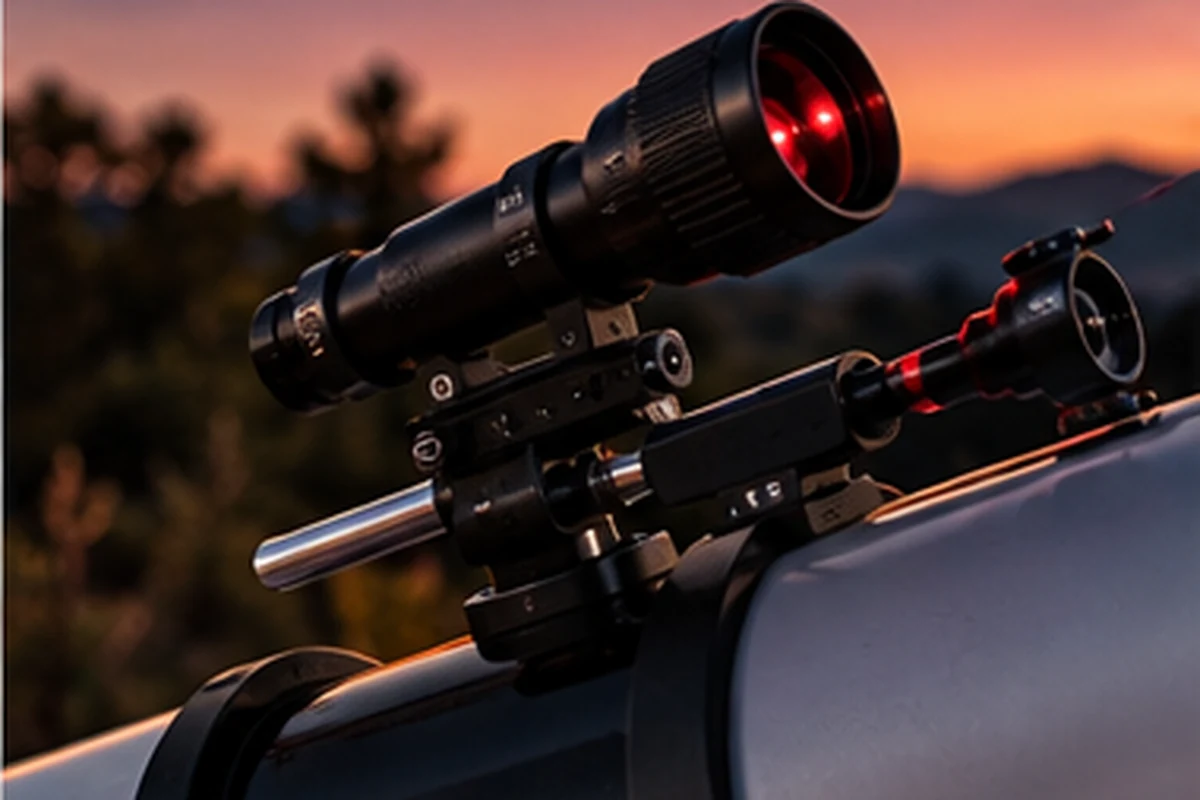
A slipping, stiff or wobbly focuser is often a tension, lock or load problem before it is a parts problem. Start with the maker's tension and lock adjustments, make very small changes and check that nothing is loose. If that does not cure it, or the focuser has play you cannot adjust out, replacing or upgrading it is usually better than trying to repair a worn one.
What each symptom usually points to
The focuser holds your eyepiece or camera and moves it in and out by a fraction of a millimetre, so any flaw in it shows up directly in the view. Three symptoms cover most complaints, and each has a different first check.
| Symptom | Common causes | First thing to try |
|---|---|---|
| Slipping: the drawtube creeps out of focus, especially with a heavy camera or eyepiece | Tension too low for the load; a heavy accessory; a worn mechanism | Use the lock if there is one, then adjust tension in small steps per the manual |
| Stiff: focusing is hard or rough | Tension set too high | Ease the tension slightly, following the manual |
| Wobbly: the view shifts when you touch the focuser or move the tube | Loose screws, play in the drawtube, or a design that moves the mirror | Check every screw and the focuser mounting, then the tension |
| Image shifts when you focus | Focus by moving the primary mirror, as on many Schmidt-Cassegrains | Check the manual for a mirror lock or other recommendations |
Wikipedia's Crayford focuser article explains the usual design: a smooth, spring-loaded axle presses against a flat on the drawtube, with bearings carrying the tube, so there are no gear teeth and no backlash. It notes that tension is usually adjustable and that the drawtube can be locked to hold heavy eyepieces or cameras. Not every telescope has this design, so check your manual for which one you have.
Slipping focusers and heavy loads
Slipping means the drawtube will not hold its place. The usual suspect is weight. A camera, a filter wheel or a heavy eyepiece pulls the drawtube down, and a focuser tension set for a light eyepiece cannot hold it. Check the maker's stated load capacity for the focuser, and keep the total below that. If the maker does not publish a figure, ask before you hang something heavy on it.
Explore Scientific's instructions for its Crayford focuser describe a tension knob that sets how firm the focus knobs are and a lock screw that locks the drawtube in place. Its finer adjustment uses small hex screws that press bearings against the drawtube, with the maker advising very small changes. Too much tension makes focusing rough, and too little means the focuser will not hold its position. Those instructions are for that maker's focuser, so follow your own manual and use the lock whenever you leave an accessory attached.
If the focuser still creeps with the lock on, or the lock does not hold, the mechanism may be worn or the load too much for the design. That is the point where an upgrade makes sense.
Stiff or rough focusers
Stiffness is the opposite problem. If the knob is hard to turn or feels gritty, the tension may be too high; ease it slightly, following the manual. Take care with lubrication: do not add grease or oil unless the maker's manual tells you which product to use, because the wrong product can attract dirt or reach optics. Keep the focuser clean and covered, and if the problem began after a cold night or a dusty storage period, check the manual before doing more.
A focuser that is simply stiff but precise is better than one that is loose, so make changes in small steps and test between each one. Aim at a distant object in daylight and focus back and forth.
Wobble, play and image shift
Wobble is play you can feel or see. The view jumps as you touch the knob or the drawtube. Check that the screws holding the focuser to the tube are snug, that any set screws or compression rings that hold your accessory are secure and that nothing is cross-threaded. Our backfocus guide and accessory compatibility guide explain how the stack of adapters can add leverage and length.
A different kind of shift appears on telescopes that focus by moving the primary mirror. Wikipedia's Schmidt-Cassegrain article notes that consumer versions focus this way, so small mirror movements are magnified by the focal length and can shift the image, a fault called mirror flop, and that some models include mirror locks to hold the mirror once focused. If you own one, check the manual for a lock and for any maker-approved add-on. Many such telescopes use a different upgrade path from a refractor or a Dobsonian.
Repair or replace: what an upgrade buys
Replacing a focuser can be worthwhile when adjustments do not cure slipping, play or roughness, or when you add a camera that is heavier than the stock design was meant to carry. Wikipedia describes Crayford focusers as relatively inexpensive and generally better than most rack-and-pinion focusers, and as common on mid-range and higher-end telescopes, and notes that commercial models can interface with motorised or robotic systems. That makes a Crayford style a common upgrade target, but it is not automatically the right one for every telescope.
An upgrade has to fit. Check the mounting pattern on your tube, the length of the drawtube and the focus travel against your accessories, and any change to backfocus. Our backfocus guide explains why the length matters for cameras. Confirm all of it from the maker's or seller's information for your exact telescope; the listing's "fits most" is not enough. If you plan to automate focus, our electronic focuser guide and the electronic focusers page cover the motorised route, which suits a focuser that already moves smoothly.
Check the mounting pattern, drawtube length, load rating and focus travel against your telescope and accessories.
Confirm that the focuser it fits and any power needs match your setup in the maker's information.
Buying a used focuser or telescope
Test the focuser first. Run it through its full travel, feel for tight spots or play, load it with the heaviest accessory you plan to use and see whether it holds. Check the lock. Our used Dobsonian inspection guide and the used telescope inspection guide include the same habit. Ask the seller about any history of repair, and read the return terms before you pay.
Checklist
- Read the manual for tension, lock and load guidance.
- Change one thing at a time, in very small steps.
- Use the lock when a heavy accessory is attached.
- Check the screws that hold the focuser and the accessory.
- Replace only if adjustments fail, and confirm the fit from the maker.
Check tension, the lock and loose screws first, and change one thing at a time in very small steps, following your manual. Slipping often means too much load for the tension, stiffness often means too much tension and wobble means play or a loose mount. Replace the focuser only if adjustments fail, and confirm fit from the maker.
Sources and verification
- Wikipedia, Crayford focuser (secondary source): how the design works, no backlash, adjustable tension, the drawtube lock, cost and motor options.
- Explore Scientific, adjusting Crayford focuser tension (maker instructions for its own focuser): a tension knob and lock screw, bearing adjustment screws, very small adjustments, and the effects of too much or too little tension.
- Wikipedia, Schmidt-Cassegrain telescope (secondary source): focus by moving the primary mirror, mirror flop and mirror locks.
No load ratings, torque figures or model compatibility are quoted. The maker's instructions are for one focuser only; use your own telescope's manual for adjustment steps, load limits and lubrication, and the maker or seller to confirm that an upgrade fits.
Frequently asked questions
Why does my telescope focuser slip?
Usually the tension is too low for the load, or the accessory is too heavy for the design. Use the lock, adjust tension in very small steps following the manual and check the maker's load guidance.
Why is my focuser stiff?
The tension may be set too high. Ease it slightly following the manual, and do not add lubricant unless the maker says which product to use.
What causes a wobbly focuser?
Loose screws, play in the drawtube or a mounting problem. On telescopes that focus by moving the primary mirror, image shift can also come from the mirror, and some models have a mirror lock.
Is a Crayford focuser better than rack and pinion?
Wikipedia describes Crayford focusers as generally outperforming most rack-and-pinion focusers for the price, with no gear backlash. Fit and load limits still depend on your telescope.
When should I replace a focuser instead of adjusting it?
When small tension changes and tightening do not stop slipping, play or roughness, or when your camera load exceeds what the stock design was meant to carry.