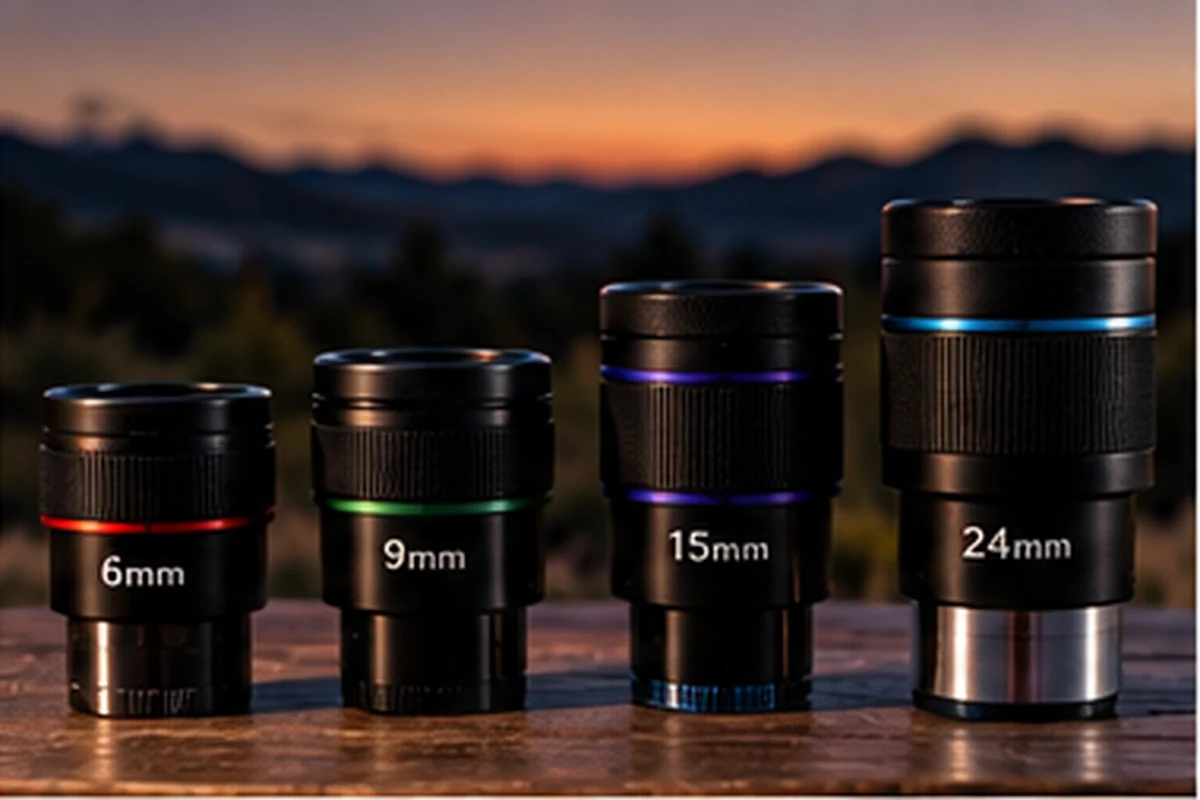
On a cold night, the eyepiece usually fogs because of how you handle it, not because of the sky. Your own breath meets the cold eye lens, and eyepieces that move between a warm pocket and cold air can collect moisture on the way. The fixes are habits: breathe away from the eyepiece, keep spares capped in a case, swap to a clean one when one fogs, and leave heaters for the problem they actually solve. This page covers the eyepiece end of the telescope, which dew shields and heater straps on the tube do not address.
Breath is the usual culprit
Exhaled air is warm and full of moisture. When it hits a lens that is colder than the air around it, some of that moisture condenses on the glass, and you see fog on the eye lens a second after you lean in. It is the same thing that fogs a bathroom mirror, only faster, because the lens is cold.
The eyepiece is also the one place on the telescope your face goes. A rubber eyecup puts your nose and mouth very close to the glass, so even a gentle breath goes straight onto it. Some habits that help:
- Turn your head slightly and breathe out to the side while your eye is at the eyepiece.
- Pause your exhale for the few seconds of a look, then step back to breathe.
- Do not lean in fully if the eyepiece has enough eye relief to let you sit a little back.
- Try a snug scarf or face covering to direct breath downward. It can fog eyeglasses, so test it before relying on it.
- Take breaks after a long look, so the lens can clear before the next one.
Observers who wear glasses have two surfaces to worry about, the eyeglass lens and the eyepiece. Taking the glasses off is sometimes an option, depending on your eyesight and on the eyepiece. Our beginner eyepiece guide covers eye relief and what to look for.
Pockets cut both ways
Many observers keep spare eyepieces in an inside pocket so they are warmer than the night air, which helps them resist fogging when they come out. The catch is that a warm pocket is a damp place. Moisture from your body and from a hand warmer can condense on a cold eyepiece that goes into it, and a damp eyepiece can then fog in the cold air or leave moisture behind. The effect depends on how cold it is, how humid it is and how long the eyepiece spends in the pocket, so treat the pocket as a habit to test, not a rule.
| Situation | What can go wrong | A simple habit |
|---|---|---|
| Cold eyepiece goes into a warm pocket | Moisture can condense on the glass | Keep it capped and in its case instead |
| Warm eyepiece comes out into cold air | It can stay clear for a while, then cool and dew up | Put caps on until it is needed, and swap in a fresh one when it does |
| Eyepiece stays uncapped on the telescope | Dew and breath can both reach the glass | Cap it between looks if you are away from the scope |
| Eyepiece kept next to a hand warmer | Moisture and uneven heat can affect the glass | Keep warmers in a separate pocket, away from the optics |
| Case left open on the ground | Cold, damp air reaches every eyepiece | Close the lid between swaps |
Fix a fogged eyepiece without making it worse
- Step away and give it a few seconds. Light fog from a breath often clears by itself in cold, dry air.
- Swap to another eyepiece. A second eyepiece, kept capped in a case, lets you keep observing while the first clears. Cap the foggy one and leave it somewhere dry.
- Do not wipe it with a sleeve or glove. Fabric can carry grit that scratches coatings, and wiping smears moisture around. If something stays on the glass, follow the maker's cleaning instructions. Our cleaning guide covers when not to clean at all.
- Do not breathe on it to clean it. That is the problem you are trying to solve.
- If fog keeps coming back, the cause is probably dew on the whole telescope, not just breath. See the dew prevention guide.
A routine for the whole night
Put the habits together and fogging mostly goes away. Before you go out, pack the eyepieces you plan to use in a case, with caps on. Carry the case outside and let it sit at outdoor temperature while you set up, so the glass is not much warmer than the air when you take it out. Use one eyepiece at a time, and put the one you are not using back in the case and close the lid. Keep a second eyepiece of a similar power ready if you want to keep looking while one clears.
At the end of the night, cap the eyepieces, close the case and carry it indoors without opening it, then follow the steps in our condensation guide. Most fog problems come from breaking this chain at one point: an eyepiece left open on a cold table, a case opened before it warms up or a warm eyepiece pushed into a pocket with a damp glove.
When a heater makes sense
If the eyepiece itself keeps dewing up even when you are careful with your breath, a heater may help, because it keeps the glass slightly warmer than the air so dew cannot form. A heater strap wraps around the eyepiece barrel, and some are made for eyepieces. Heaters are electrical, so check the manual for the power source, the connectors and any controller. Our dew heater strap guide and controller guide explain what to compare. A heater is only worth buying once breath and handling are under control.
Check the strap size against your eyepiece barrel, and confirm the power source and connector in the maker's manual.
Gear that keeps spares clear
The simplest tool is a closed case. A padded eyepiece case with a lid keeps spare eyepieces at outdoor temperature, shielded from breath and from damp air, and it keeps them from rolling off a table in the dark. Our eyepiece case guide covers the options. Used cases are common on marketplaces and are good value if the foam is intact and the latches work.
Pick a case with a closing lid and a little room for one more eyepiece. Check the inside dimensions in the listing.
Caps matter too. Plastic dust caps for both ends of an eyepiece are cheap and easy to lose, so keep a few spares. A small red light helps you find the right eyepiece without ruining your night vision; see our red light guide. If the problem is moving gear from a warm room to cold air, or the other way, read bringing a telescope indoors in winter.
Match the cap to the barrel size of your eyepieces. Check the listing for the size it fits.
Breathe away from the eyepiece, keep spares capped in a closed case and swap in a clear one when the first fogs. Do not wipe the glass, and add a heater only if the eyepiece still dews up once your handling is good.
Sources and verification
This guide gives no temperatures, humidity levels or heater power figures. It describes common field habits, so adjust to your own conditions, follow the manual for any heater, and use the maker's cleaning instructions for lenses.
Frequently asked questions
Why does my eyepiece fog when I look through it on a cold night?
Usually your breath. Warm, moist air hits the cold eye lens and condenses on the glass. Turn your head, breathe out to the side and avoid leaning right in.
Is it a good idea to keep eyepieces in my pocket?
It can help them resist fog in the cold, but a warm pocket is damp and a cold eyepiece can pick up moisture there. Try it, watch the results and keep spares capped in a case if it does not work.
Can I wipe fog off an eyepiece with a cloth?
No. Let it clear on its own or swap in another eyepiece. If marks remain, follow the maker's cleaning instructions before touching the glass.
Do I need a heater strap for my eyepieces?
Only if the eyepiece keeps dewing up when your handling is good. Heaters are electrical, so follow the maker's manual for the power source and connectors.
Do glasses make eyepiece fogging worse?
They add a second surface that can fog. A face covering can fog them further, so test it, and take the glasses off if your eyesight and the eyepiece allow.