
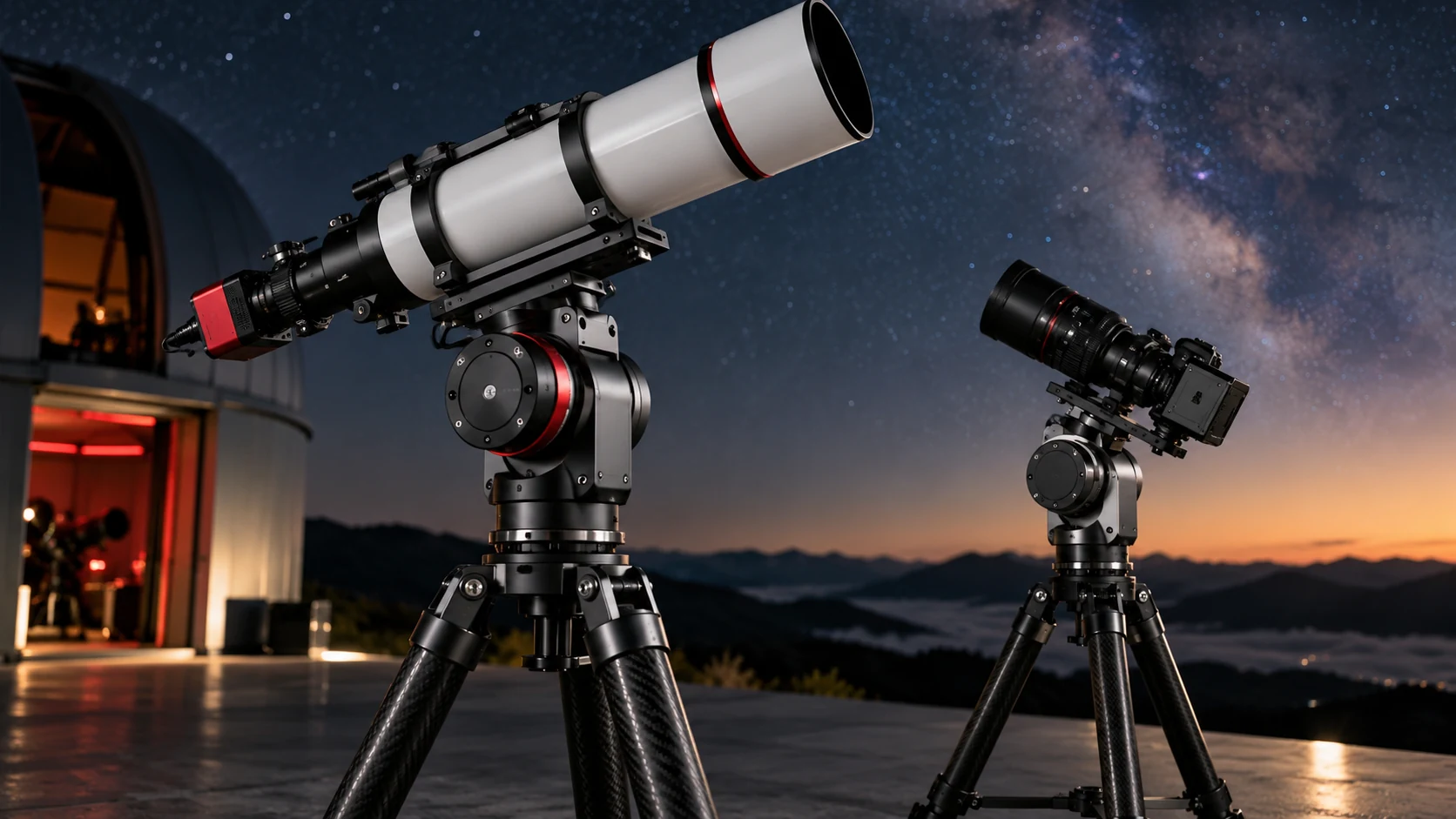
Who this equipment fits
Fast imaging optics designed around illuminated field, sensor coverage, and correction. The best choice depends on target, setup frequency, transport, storage, observing posture, local sky, and whether the goal is visual astronomy or imaging.
Specifications that actually matter
- Optical or mechanical size, total assembled weight, and balance
- Focal length, field coverage, image scale, or payload geometry
- Focus travel, thread standards, dovetail type, and adapter stack
- Power voltage, connector polarity, current demand, ports, and software support
- Setup time, cooling, collimation, dew exposure, and transport protection
Build the complete system
The core product is rarely the complete purchase. Budget for the mount or support, finder, eyepiece or camera connection, dew control, power, cases, cables, tools, and a safe observing position. A stable smaller system can outperform a larger unstable one.
Used-equipment inspection
- Confirm the exact model and generation from labels, not the seller’s guess.
- Inspect optics under normal reflected light for fungus, coating failure, chips, or cleaning damage.
- Move every axis, focuser, clutch, and adjustment through its usable range.
- Test electronics with the correct power supply and all required controllers.
- Price missing proprietary parts before deciding the bundle is complete.
Research current listings
Use marketplace results to study complete photos, included accessories, model variations, condition, and sold comparables. A listing title is not proof of compatibility, performance, or condition.
A disciplined buying sequence
- Define the observing or imaging goal before selecting hardware.
- Confirm every mechanical, electrical, optical, and software interface.
- Inspect exact model numbers, serials, included adapters, and power requirements.
- Compare complete systems rather than headline aperture or payload alone.
- Keep enough budget for mounting, power, dew control, cases, and safe transport.
Astrograph versus ordinary telescope: what matters
Field correction, not just aperture
An astrograph is designed around usable imaging performance over a specified sensor field. Check the corrected image circle, focal ratio, compatible sensor size, and whether a matched flattener or corrector is required.
A fast optical tube still needs a capable mount
Long exposures reveal tracking errors and flexure. The camera, guiding equipment, adapters, cables, and accessories count toward the effective payload, not just the tube’s weight.
Compare complete-system cost
Budget for spacers, focusing, guiding, dew protection, mounting hardware, and processing storage. A lower-cost tube can become expensive if its accessory requirements are unclear.