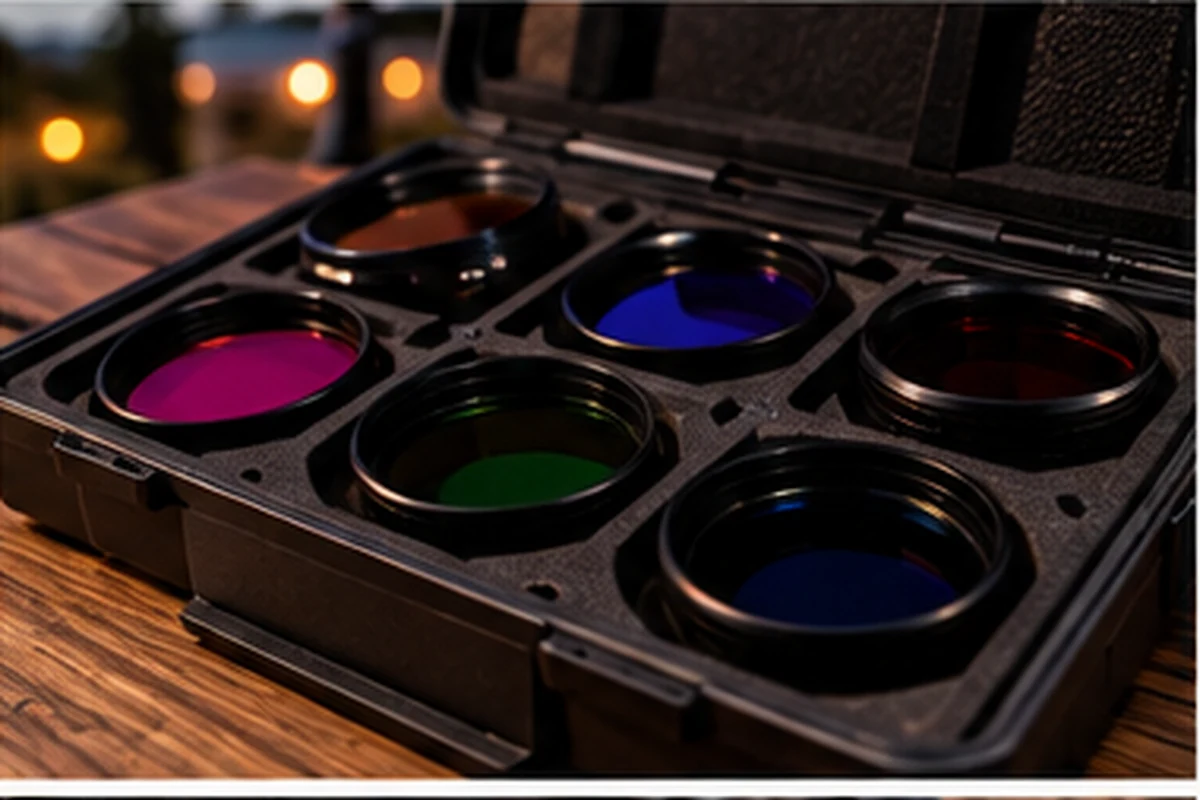
Buy a solar filter from the telescope maker, a filter maker or one of their authorized sellers, and match it to your exact telescope using the maker's own fit information, not a listing that says it fits "most" scopes. Never look at the Sun through any optic without a certified solar filter from the maker, attached securely over the front opening, and follow the maker's instructions. This guide is about choosing and sourcing the right filter, not about improvising one.
What a solar filter does, and where it goes
A solar filter for a telescope is a front-mounted filter that reduces sunlight before it enters the optics. The American Astronomical Society says a filter for a telescope, binoculars or camera lens must be attached securely to the front of the instrument, over the front opening. NASA's eclipse safety page says the same thing in its own words: solar filters go on the front of the optics.
That placement matters because it is the only way to stop concentrated sunlight from entering the instrument. The AAS warns that filters that thread into the eyepiece end are dangerous, because sunlight concentrated by the optics can destroy them, and it tells observers to discard them. If a telescope you buy or inherit came with one, do not use it.
Eclipse glasses and handheld solar viewers are a different product. NASA is explicit that they are not for use with cameras, binoculars or telescopes. A pair of glasses held up to an eyepiece is not a solar filter.
Why the maker's fit list matters
A front-mounted filter has to hold firmly on your particular telescope. Fronts differ in outside diameter, dew shields, lens cells and lips, so a filter made for one tube may be loose, wobble or fall off another. A filter that slips or is not secure is a hazard, which is why the fit list matters more than a general "universal" claim.
Makers typically state which telescope models or front diameters a filter is made for. When your exact telescope is named on the maker's page, you have the maker's word that the filter is meant for it. When it is not, do not guess or adapt it to fit: ask the maker, or ask a local astronomy club member who has used the same telescope. The AAS says to use any filter according to the supplier's instructions, and it advises consulting an expert astronomer before using a solar filter with any telescope, binoculars, camera or other optics.
| Check | What to confirm | Where to confirm it |
|---|---|---|
| Telescope model | The exact name and model, and the front-end design | The label on the tube, the manual and the maker's spec sheet |
| Front opening | The outside diameter at the front, with or without any dew shield or hood | The manual or spec sheet, as a cross-check against the filter listing |
| Fit list | Your telescope or its diameter on the maker's compatibility list | The filter maker's product page or the seller |
| Filter type | A filter that covers the full front opening of the telescope | The product page and the instructions |
| Mounting | How it attaches and how it is secured against wind and bumps | The instructions |
| Seller | The maker or an authorized seller; sold new, with instructions | The maker's page and the AAS vendor list |
| Instructions | Written directions that arrive with the filter | The box or the first page in the listing |
Where to buy one
The AAS keeps a page of solar-viewing suppliers, listing manufacturers and authorized resellers alphabetically, and it says the order does not imply any preference. NASA says it does not approve any particular brand. Use those pages as a starting point for finding the maker of a filter that matches your telescope, and read each maker's product page for the fit list.
A certification statement printed on packaging is not, by itself, proof that a product is safe, as our own solar safety page notes. Buy from the maker or an authorized seller, and keep the instructions that arrive with the filter.
You will notice there are no marketplace search buttons in this guide. That is deliberate. A marketplace listing cannot show the condition of a filter's film or glass, whether instructions are included or whether the seller is authorized, and a damaged filter is not safe to use. Check the maker's page first.
Binoculars, finders and cameras need their own filters
The same rule covers every optic pointed at the Sun. Binoculars need a filter over the front of each barrel, made for that binocular, and a camera lens needs a filter over the front of the lens. A finder is an optic too. Our solar safety page advises removing or capping an optical finder unless it is independently and correctly filtered, and our guides to red-dot finders and RACI finderscopes explain what each one is. A Moon filter is not a solar filter, and our Moon filter guide covers the difference.
Dedicated solar telescopes, such as hydrogen-alpha systems, are complete systems. Do not mix filters or modules based on thread fit alone, and follow the maker's instructions for the exact model. Our solar telescopes category lists what exists.
Before the first use
- Read the instructions that came with the filter, and follow them.
- Inspect the filter. The AAS says to check it before each use and discard it if it is scratched, punctured, torn or otherwise damaged.
- Attach it securely over the front opening, so that wind or a bump cannot knock it off.
- Cover or remove the finder unless it is separately filtered.
- Supervise children at all times. The AAS says adults should always watch children who use solar filters.
- Ask an experienced observer to look over your setup before your first session. A local astronomy club is a good source; see our astronomy clubs guide.
This guide gives no instructions for making a filter. Improvised materials are not safe, and our solar safety page lists several that must not be used, including sunglasses and smoked glass. If a maker does not list a filter for your telescope, the answer is to ask the maker, not to adapt something else.
Never look at the Sun through any optic without a certified solar filter from the maker, secured over the front opening. Match the filter to your exact telescope using the maker's fit list, buy from the maker or an authorized seller and follow the instructions. If your model is not listed, ask the maker instead of adapting something else.
Sources and verification
- American Astronomical Society, solar viewers and filters: filters must be attached securely over the front opening, eyepiece-end filters should be discarded, use according to the supplier's instructions, and the supplier page lists manufacturers and authorized resellers alphabetically with no implied preference.
- American Astronomical Society, eye safety: check a filter before each use and discard it if scratched, punctured or torn, read the instructions that come with it, supervise children, and consult an expert astronomer.
- NASA, eclipse safety: filters go on the front of optics, eclipse glasses and handheld viewers are not for use with optics, and NASA does not approve any particular brand.
- AstronomyEquipment.com, solar safety: finders, packaging claims and improvised materials, and complete hydrogen-alpha systems.
No filter brands, models or specifications are named, and no certification claim is made for any product. Confirm the fit list, the instructions and the seller's authorization on the maker's own page.
Frequently asked questions
How do I know a solar filter fits my telescope?
Match your exact telescope model and front opening to the filter maker's own fit list on the product page, and confirm with the maker or seller if your model is not listed. Do not guess or adapt a filter to fit.
Can I use eclipse glasses on a telescope?
No. NASA says eclipse glasses and handheld viewers are not for use with cameras, binoculars or telescopes. A telescope needs a solar filter from the maker over its front opening.
Where does a solar filter go?
Over the front opening of the telescope, secured firmly, so that sunlight is filtered before it enters the optics. A filter that threads into the eyepiece end is dangerous and should be discarded.
Should I buy a used solar filter?
This guide does not point you to marketplace listings, because a listing cannot show the condition of the filter or whether instructions are included. Buy from the maker or an authorized seller, and ask the maker if you are unsure.
Do my finder and binoculars need filters too?
Yes. Every optic pointed at the Sun needs its own filter over the front, or should be removed or capped. Do not look at the Sun through any optic without a certified solar filter from the maker.